How to reduce rabbit litter odour: practical solutions that work
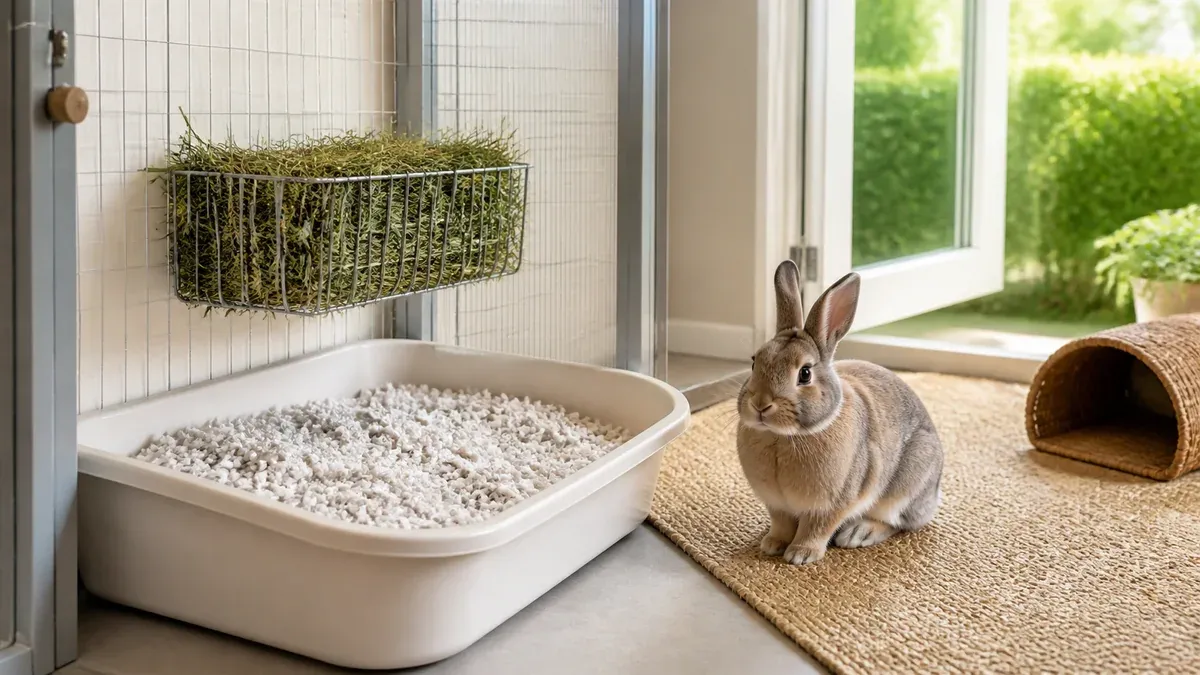
A well-managed litter box should not smell strong. If odours persist despite regular cleaning, one or more key levers have not yet been addressed. The good news: in most cases, a few simple adjustments are enough to make living with a rabbit nearly odour-free.
Lever 1: substrate choice
This is often the first cause of persistent odours. Not all substrates absorb equally well.
| Substrate | Absorption | Odour control | Notes |
|---|---|---|---|
| Compressed wood pellets | ★★★★★ | ★★★★★ | Best value for performance |
| Hemp bedding | ★★★★ | ★★★★ | Natural, low dust |
| Flax bedding | ★★★★ | ★★★★ | Good ammonia capture |
| Recycled paper bedding | ★★★★ | ★★★ | Very absorbent, less deodorising |
| Straw alone | ★★ | ★★ | Insufficient as a sole substrate |
| Plain wood shavings | ★★★ | ★★★ | Moderate, less effective than pellets |
Compressed wood pellets are particularly effective because they absorb urine and lock in ammonia — the main source of litter box smell. Avoid scented or essential-oil-based substrates, which are irritating to rabbits.
For a full substrate comparison, see our guide on the best bedding for rabbits.
Lever 2: cleaning frequency and method
A good substrate does not compensate for insufficient cleaning. The rule to remember:
- Remove soiled patches: daily, or at most every 2 days
- Full tray clean: once a week (complete emptying, washing, rinsing, drying)
Ammonia develops quickly in stagnant urine — even under a substrate that looks dry on the surface. Regular cleaning breaks the bacterial growth cycle before smells have a chance to build up.
For the complete step-by-step method, see our guide on how to clean a rabbit litter box.
Lever 3: tray size and position
A tray too small for the rabbit’s size becomes saturated faster and concentrates odours:
- An adult rabbit needs a tray of at least 40 × 30 cm (larger for bigger breeds)
- The substrate layer should be at least 3–5 cm deep to absorb urine without leaving the base wet
- The tray must be accessible and not boxed in a corner where air cannot circulate
For detailed guidance on choosing the right tray size, wall height and material for your rabbit, see our guide on the best litter tray for rabbits.
Lever 4: room ventilation
Rabbit urine odour is primarily composed of ammonia, a gas that accumulates in poorly ventilated spaces.
Practical recommendations:
- Ventilate the room where the rabbit lives for at least 10–15 minutes daily, even in winter
- Avoid placing the enclosure in a dead-air corner
- A slow-rotating fan or small air extractor can make a real difference in a confined room
- Do not try to mask the smell with scented sprays or air fresheners — the rabbit is sensitive to them and they do not address the cause
Lever 5: diet
What the rabbit eats directly affects the smell of its urine and droppings.
- Too many pellets or a protein-rich diet → more concentrated, stronger-smelling urine
- Ad-lib hay (as it should be) → drier droppings, reduced odour
- Excess watery vegetables (cucumber, lettuce) → softer, stronger-smelling droppings
- Too many sugary treats or fruit → digestive fermentation, stronger digestive odours
With a balanced diet (roughly 80% hay, 15% leafy greens, 5% quality pellets), hard rabbit droppings are virtually odour-free.
Lever 6: neutering or spaying
An unneutered male rabbit’s urine is significantly stronger than that of a neutered animal. Sex hormones alter urine composition and amplify its smell, especially between 4 and 18 months.
Castration (male) or spaying (female):
- Significantly reduces urinary odour intensity
- Eliminates territorial urine spraying outside the tray
- Generally improves litter box habits
The effect on odour is often noticeable within the first few weeks after the procedure.
What does not work
- Litter deodorising sprays: mask temporarily, do not absorb; often irritating to rabbits
- Scented litter: same issue — the root cause is not addressed
- Diffusers, scented candles and essential oils: they add volatile compounds to the air of an animal that breathes through its nose only; the product-by-product breakdown is in are air fresheners dangerous for rabbits
- Moving the tray frequently: disrupts the rabbit’s toileting habits without fixing the smell
- Cleaning the tray with bleach: toxic to rabbits and counterproductive (ammonia reacts with chlorine)
To keep odour down long term, focus on a suitable tray, absorbent bedding, ventilation, and a regular cleaning routine.
Frequently asked questions
Should a rabbit's litter box smell strongly?
No. A properly managed litter box with a good absorbent substrate should produce no noticeable smell in the room. If you can smell the urine from several feet away, the cause is usually insufficient cleaning frequency, a poorly absorbing substrate, or a health issue (urinary infection, unbalanced diet).
Does a neutered rabbit really smell less?
Yes, significantly. Sex hormones intensify urine odour, especially in unneutered males whose urine can be very strong. Castration or spaying markedly reduces urinary odour intensity — sometimes within just a few weeks of the procedure.
Can I put bicarbonate of soda in the rabbit's litter box?
A small amount sprinkled under the substrate can slightly absorb ammonia odours, but its effectiveness is limited and short-lived. It does not replace a good substrate or regular cleaning. Make sure the rabbit cannot ingest it in quantity — if you use it, keep it at the bottom of the tray, well covered by substrate.
Why has my rabbit's urine suddenly become much stronger smelling?
A sudden change in urine odour can indicate a urinary infection, dehydration (concentrated urine), a dietary imbalance (too much protein, too many pellets relative to hay), or hormonal cycles in an unspayed female. If the change is noticeable and persistent, see a rabbit-savvy vet.