Best litter tray for rabbits: what to look for and what to avoid
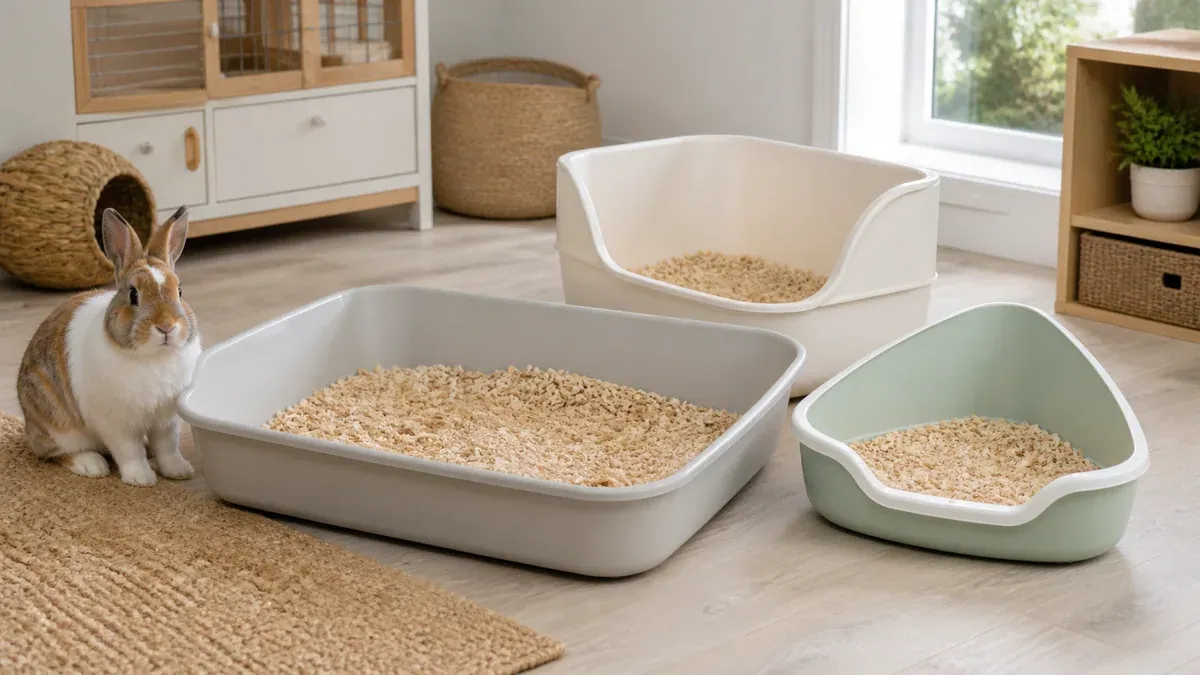
The litter tray is the core hygiene accessory for a domestic rabbit. A poor choice — too small, too enclosed, badly positioned — can undermine toilet training even in a well-trained rabbit. Here are the concrete criteria for making the right decision.
Size: the most important criterion
The rabbit must be able to enter, turn around, and settle comfortably inside the tray. A simple rule: the tray length should be at least equal to the rabbit’s body length, measured from nose to base of tail.
| Rabbit size | Recommended tray length |
|---|---|
| Dwarf rabbit (under 1.5 kg) | ≥ 35 × 25 cm (14 × 10 in) |
| Medium rabbit (1.5 to 3 kg) | ≥ 45 × 35 cm (18 × 14 in) |
| Large rabbit (3 to 6 kg) | ≥ 55 × 40 cm (22 × 16 in) |
| Giant breed (over 6 kg) | ≥ 65 × 50 cm (26 × 20 in) |
A tray that is too small forces the rabbit to hang over the edge, which accounts for most litter box “misses”.
Wall height
- Low sides (6–8 cm / 2.5–3 in): ideal for older rabbits, rabbits with joint problems, or dwarf breeds that struggle to step over.
- Standard sides (10–15 cm / 4–6 in): suitable for most healthy adult rabbits.
- High sides (15–20 cm / 6–8 in): useful for rabbits that dig vigorously and scatter litter, or to contain urine spray.
A good option for active diggers while maintaining easy access: a high-sided tray with a cut-out entrance at the front.
Open vs covered
An open tray is consistently preferable for rabbits. The reasons:
- Ventilation: moisture and ammonia escape freely. A covered tray concentrates both, worsening smell and irritating the respiratory tract.
- Ease of maintenance: daily spot-cleaning is immediate, with no lid to remove.
- Monitoring: you can observe urines and droppings — two important health indicators — without needing to open anything.
Avoid lidded trays, top-entry trays, and enclosed hutch inserts, regardless of how discreet they look.
Material
Most litter trays are made from hard plastic, which is well suited: easy to clean, durable, lightweight. Things to check:
- Smooth interior surface: rough surfaces trap urine and bacteria.
- No sharp interior corners: easier to scrub thoroughly.
- Stability: a lightweight tray a digging rabbit can tip over should be weighted or clipped in place.
Avoid untreated natural wood trays: they absorb urine, are difficult to disinfect, and deteriorate quickly.
What the tray does not replace
The choice of tray is separate from the choice of bedding (the substrate you put inside it). A good tray with a poor substrate will not control odours — and the reverse is equally true.
For choosing the right substrate (hemp, compressed wood pellets, paper, flax), see our guide on the best bedding for rabbits.
For reducing persistent litter odours despite good substrate, see our guide on how to reduce rabbit litter odour.
Where to place the tray
Position matters as much as size. Practical rules:
- In the corner the rabbit has already chosen for toileting (if you have observed its habits). Placing the tray where the rabbit already goes maximises uptake immediately.
- Away from direct light and feeding areas: rabbits do not toilet where they eat.
- Always accessible: never block access to the tray, even partially.
For a complete overview of domestic rabbit needs and care, visit the rabbit species page.
Frequently asked questions
Can I use a cat litter box for a rabbit?
Yes, provided it is large enough. Trays designed for large cats (at least 50 × 40 cm) work well for medium-sized rabbits. Avoid top-entry cat litter boxes, which are not suited to the rabbit's body shape.
Do rabbits need a covered litter tray?
No, and covered trays are actually discouraged. A lid traps moisture and ammonia inside, worsening smells and irritating the rabbit's airways. An open tray, cleaned regularly, is always preferable.
My rabbit is not using the litter tray — could the tray itself be the problem?
It may be. A tray that is too small, too deep, or poorly positioned can put a rabbit off. But the issue often comes down to placement: put the tray in the corner the rabbit has already chosen for its toileting, and add a few droppings inside to encourage use.
How many litter trays does a free-roaming rabbit need?
At least one per room the rabbit has access to. Even a well-trained rabbit will tend to pick a corner in each room. Providing two trays in larger open-plan spaces is good practice.