Scurvy in guinea pigs: vitamin C deficiency and treatment
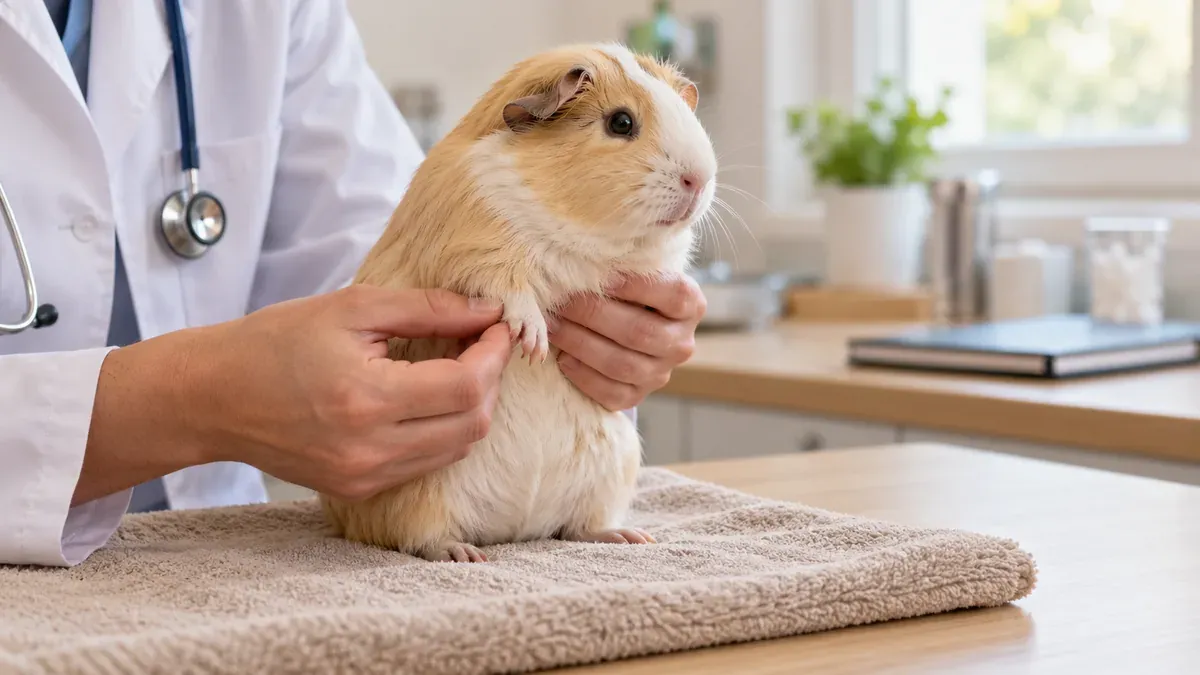
Vitamin C deficiency, or scurvy, happens when a guinea pig’s diet does not supply enough of a vitamin it cannot make itself. It can show as a rough coat, loss of appetite, reluctance to move, swollen joints or bleeding gums. These signs have other possible causes: see your vet, who alone can confirm the deficiency and treat it.
This guide helps you recognise the situations that call for a vet and prepare for the appointment. Daily requirements and sources of vitamin C are covered in how much vitamin C does a guinea pig need?
What is scurvy?
Guinea pigs are among the few mammals, along with humans, that cannot produce vitamin C (Merck). They have to get it from their food every day. This vitamin maintains skin, joints, blood vessels and mucous membranes such as the gums, and plays a part in wound healing and immune defences (Merck, VCA).
Merck counts it among the most common nutritional problems in guinea pigs. Without enough of it, deficiency can lead to weakness and death (Merck). It also makes guinea pigs more prone to other illnesses, including infections and skin problems (VCA).
Situations that put a guinea pig at risk
- Old or poorly stored pellets: vitamin C breaks down with time, heat, light and moisture (Merck). The PDSA advises using pellets within three months of purchase.
- Pellets made for another species, especially rabbits: they do not contain enough vitamin C (Merck).
- Few vitamin C-rich vegetables, or a guinea pig that refuses them (VCA, PDSA).
- A supplement added to the water: vitamin C breaks down quickly there, and the taste can reduce drinking (VCA).
- Higher needs: VCA says the requirement varies with age, health, stress and pregnancy; Merck gives a need three times higher in pregnant females.
Possible signs, and why they need a vet
| What you notice | Why see a vet |
|---|---|
| Rough, dull coat (Merck, VCA) | A non-specific sign that other illnesses can cause: it deserves an examination, especially alongside another sign. |
| Eating less, losing weight (Merck, VCA) | Loss of appetite is an emergency in itself in guinea pigs, whatever the cause: see my guinea pig is not eating. |
| Reluctance to move, limping, signs of pain (Merck, VCA) | Abnormal walking also appears in Merck’s general list of signs of illness: the cause has to be found by examination. |
| Swollen feet or joints (Merck, VCA) | Swelling needs an examination to find its origin. |
| Bleeding or ulcers on the gums or skin, bleeding under the skin (Merck, VCA) | A sign both sources describe in deficiency, but one that still needs a diagnosis. |
| Drooling, difficulty eating, dental problems (Merck) | Deficiency is one of the causes of dental disease (Merck, VCA), but teeth can be affected for other reasons. |
| Diarrhoea (Merck, VCA) | A digestive problem can worsen quickly in guinea pigs. |
| Weakness, dullness, sudden decline (Merck) | See a vet immediately. |
Why it cannot be settled at home
None of these signs is unique to scurvy. A limping guinea pig may have injured itself, a drooling one may have a dental problem without any deficiency, and several causes can combine. A deficiency can also exist alongside another illness. That is why a trial treatment at home is not a good idea: it delays diagnosis without guaranteeing it targets the right cause.
VCA advises having a guinea pig with signs of deficiency seen as soon as possible.
Preparing for the appointment
The vet will aim to confirm the deficiency, understand its cause and check that no other illness is involved. Bring:
- the bag of pellets, with its purchase or manufacturing date if shown;
- the list of vegetables you usually give, and those it refuses;
- any supplements used, in their packaging;
- what you have noticed: since when, appetite, droppings, weight if you know it.
If several guinea pigs share the same diet, say so: they eat the same food, and the vet can judge whether they should be examined too.
How the vet treats the deficiency
Merck explains that treatment relies on daily vitamin C, by mouth or by injection, as directed by the vet. The form, dose and duration are a matter for their prescription: they are not the same as the guides given for a healthy guinea pig. If other problems are present, such as dental disease or loss of appetite, they are treated at the same time.
Preventing it from happening again
Prevention relies on the diet, not on permanent treatment:
- fresh guinea pig pellets, stored well and renewed daily;
- vitamin C-rich vegetables every day, varied;
- no vitamin C in the water;
- a supplement only on the vet’s advice, especially after a deficiency.
These points, with requirements and the question of supplements, are covered in how much vitamin C does a guinea pig need?
Next step
After the appointment, review the diet with what vegetables can guinea pigs eat, which gives the vitamin C content of common vegetables. For the overall feeding routine, see what do guinea pigs eat.
Sources
- Merck Veterinary Manual — Nutritional problems of guinea pigs: role of vitamin C, signs of deficiency, higher need in pregnancy, treatment by mouth or injection as directed by the vet.
- Merck Veterinary Manual — Common health problems of guinea pigs: vitamin C deficiency among the causes of dental disease.
- Merck Veterinary Manual — Routine care of guinea pigs: general signs of illness, including abnormal walking.
- VCA Animal Hospitals — Feeding guinea pigs: signs of deficiency, seeing a vet as soon as possible, varying needs.
- VCA Animal Hospitals — Health problems in guinea pigs: scurvy, susceptibility to infection, vitamin C in water.
- PDSA — Your guinea pig’s diet: risk of scurvy, pellet storage.