Foods guinea pigs should not eat: the list explained
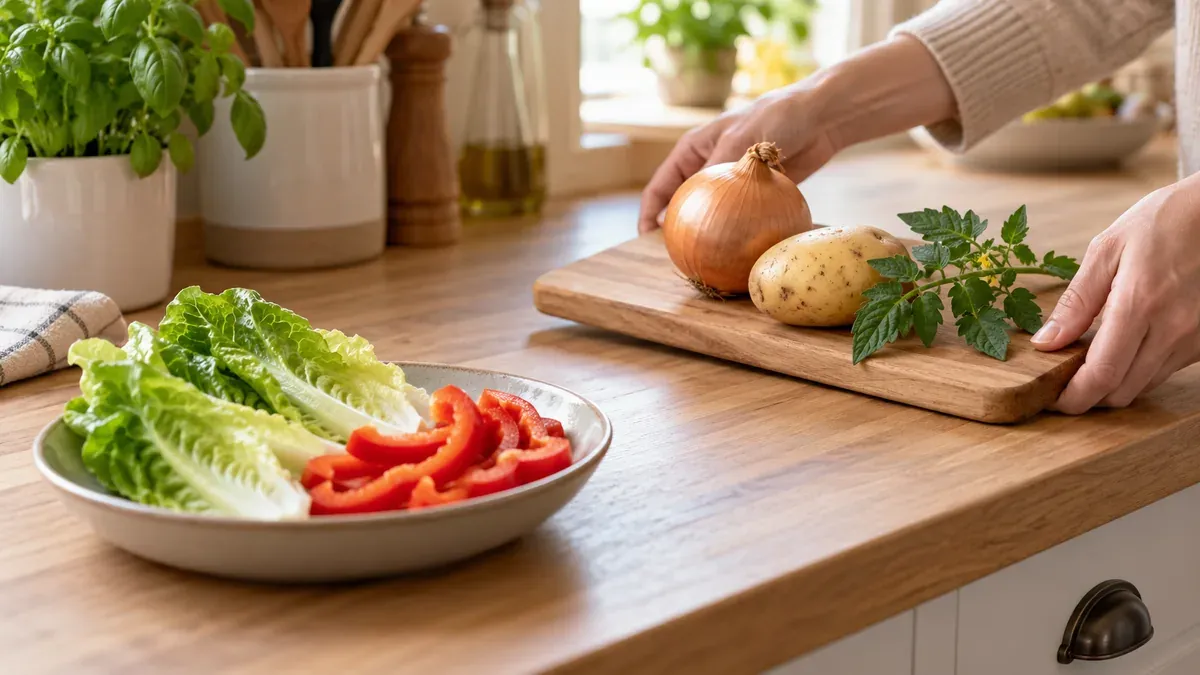
Do not give a guinea pig potato, garlic, onion, chives, avocado, mushrooms or rhubarb, nor tomato vines and leaves or apple pips: the RSPCA and the PDSA list them among foods that are harmful or poisonous. Other foods are not poisons but unbalance the diet, such as seeds, cereals or sugary treats.
This guide separates these categories, food by food, with the source of each restriction. If your guinea pig has just eaten something suspicious, go straight to the section “It has eaten some: what now?”.
What the sources list as harmful or poisonous
The RSPCA presents its list as foods that “can be harmful or poisonous” to guinea pigs. The PDSA explains that among the plants on its list, some are poisonous, some cause an upset tummy and some are a choking hazard, without saying which is which. The table therefore reproduces these lists as they are, without assigning each food a mechanism the sources do not give.
| Food | Part concerned | Source |
|---|---|---|
| Potato | Tuber and skin | RSPCA, PDSA |
| Garlic | Not specified by the sources | RSPCA, PDSA |
| Onion | Not specified by the source | PDSA |
| Chives | Not specified by the source | PDSA |
| Avocado | Not specified by the sources | RSPCA, PDSA |
| Mushrooms | Not specified by the source | PDSA |
| Rhubarb | Stalk and leaves | PDSA |
| Coconut | Not specified by the source | RSPCA |
| Tomato | Vine and leaves only: the fruit can be given | PDSA |
| Apple | Pips only: the PDSA says they are poisonous, the flesh can be given in small amounts | PDSA |
| Iceberg lettuce | Leaves | RSPCA, PDSA (see below) |
When the source does not specify the part concerned, treat the whole food as one to avoid. These lists give examples: they do not claim to cover every dangerous plant. A food missing from the table is not therefore safe. Lists written for dogs, cats or rabbits do not transfer as they are to guinea pigs.
A restriction does not always apply to the whole plant
Tomato and apple show why the part concerned matters. The PDSA allows tomato fruit, but not the vine or leaves. It lists apple among fruits that can be given in small amounts, but states that the pips are poisonous. Remove the pips, and never give the green parts of a tomato plant.
Other dangers, outside the food bowl
| Danger | Why | Source |
|---|---|---|
| Lawnmower clippings | Ferment quickly and make guinea pigs ill | PDSA, RSPCA |
| Toxic houseplants | Guinea pigs gnaw what is within reach during out-of-cage time | Merck |
| Garden plants such as poppies, tulips or daffodils | Toxic to guinea pigs and other pets | PDSA |
| Foraged plants you cannot identify, or picked in treated areas | Risk of toxic plants, weed killer or pesticide | PDSA |
| Medicines given without veterinary advice, especially antibiotics bought in pet shops | Some antibiotics upset the gut bacteria and can cause fatal diarrhoea | VCA, Merck |
During out-of-cage time, Merck recommends supervising your guinea pig and clearing the area of cables and toxic plants. The PDSA suggests keeping guinea pigs away from flower beds if in doubt.
Not toxic, but not advised: what unbalances the diet
The sources do not present these foods as poisons. They cause a different problem: they take the place of hay, bring too much sugar, carbohydrate or fat, or fail to meet a guinea pig’s particular needs.
- Oats, seeds, nuts and dry cereals: too high in carbohydrates and fat (VCA).
- Muesli-style mixes: the guinea pig picks out only what it likes best (PDSA).
- Colourful shop-bought treats: very high in sugar, bad for teeth and digestion (PDSA).
- Rabbit pellets: not enough vitamin C for a guinea pig (Merck).
- Iceberg lettuce: mostly water, with little nutritional value (VCA, Merck). The RSPCA and the PDSA include it in their lists of foods to avoid.
Limit, without banning
- Fruit: high in sugar, it stays occasional and in small amounts (Merck, VCA, PDSA).
- High-calcium greens such as parsley, kale or spinach: not often (Merck), and not daily or free choice (VCA).
- Cabbage and broccoli: can cause gas in large amounts (PDSA).
The vitamin C and calcium content of these plants is set out in what vegetables can guinea pigs eat.
Citrus fruit: the sources disagree
The RSPCA lists citrus fruits among foods guinea pigs can’t eat. VCA, on the other hand, names orange and kiwi as occasional fruits high in vitamin C. Without agreement, the simplest option is to leave them out: there is no need to give citrus at all. According to the ANSES-Ciqual 2025 dataset, red sweet pepper contains 121 mg of vitamin C per 100 g, against 47.5 mg for orange flesh, and it is one of the vegetables the RSPCA says can be given often.
It has eaten some: what now?
Call your vet. The PDSA advises speaking to your vet as soon as you suspect your guinea pig has eaten something poisonous. Do not wait for symptoms and do not try home remedies.
Have this information ready for the call:
- the food or product involved, with its packaging or a photo of the plant if possible;
- the part eaten: leaf, stem, fruit, seed, pips;
- the estimated amount;
- the time it was eaten, or the last time you saw your guinea pig without access to it;
- the signs observed since: appetite, droppings, behaviour, breathing.
If several guinea pigs had access to the food, say so: they may all have eaten some.
A guinea pig that eats less or stops eating after a dietary slip, or for no obvious reason, needs to be seen quickly: see my guinea pig is not eating.
Next step
Replace risky foods with those the sources recommend: the basic diet is described in what do guinea pigs eat, and choosing vegetables in our vegetable table. Before out-of-cage time, also check the plants and cables within reach.
Sources
- RSPCA — What to feed a guinea pig: harmful or poisonous foods (iceberg lettuce, potato, garlic, avocado, coconut, citrus fruits), lawnmower clippings.
- PDSA — Your guinea pig’s diet: unsafe plants, tomato and apple pips, treats, clippings, what to do after ingestion.
- PDSA — The ideal home for your guinea pigs: toxic garden plants.
- VCA Animal Hospitals — Feeding guinea pigs: oats, seeds, nuts, cereals, iceberg lettuce, orange and kiwi.
- VCA Animal Hospitals — Health problems in guinea pigs: antibiotics bought in pet shops.
- Merck Veterinary Manual — Unique needs of guinea pigs: houseplants and cables during out-of-cage time.
- Merck Veterinary Manual — Common health problems of guinea pigs: no medication without veterinary advice.
- ANSES — Ciqual 2025 table: vitamin C in red sweet pepper (20087) and orange (13034).